
Common Office Chair Problems and How Professional Repair Solves Them
Office chairs are among the most frequently used pieces of furniture in homes, offices, clinics, salons, and commercial workplaces, yet they are also one of the most neglected when it comes to maintenance. People often continue using damaged or uncomfortable office chairs without realizing how deeply these issues affect productivity, posture, and long-term health.
Over time, continuous sitting, movement, and weight pressure cause office chairs to develop various mechanical and structural problems. Many users believe that once an office chair starts sinking, wobbling, or making noise, replacement is the only option. In reality, most office chair problems are mechanical in nature and can be effectively solved through professional repair, restoring comfort and functionality at a much lower cost than purchasing new chairs.
One of the most common office chair problems is hydraulic failure. This occurs when the gas lift mechanism inside the chair loses pressure, causing the seat to sink slowly or fail to stay at the desired height. A sinking chair forces users into poor sitting positions, placing strain on the lower back, knees, and thighs. Many people attempt temporary fixes, such as using cushions or adjusting posture repeatedly, but these methods do not solve the root issue.
Professional office chair repair involves replacing or repairing the hydraulic gas lift with a reliable component that restores smooth and stable height adjustment. Once repaired, the chair remains firmly at the selected height and supports proper ergonomic posture throughout long working hours.
Another frequent issue is instability caused by damaged chair bases or loose internal joints. A chair that feels uneven or tilts unexpectedly can be uncomfortable and unsafe, especially in environments where users move frequently. Cracked plastic bases, bent metal components, or loosened fasteners gradually weaken the chair’s structure.
Ignoring these problems increases the risk of sudden collapse or injury. Professional repair services address these structural weaknesses by reinforcing joints, replacing damaged bases, and tightening all internal connections. This restores balance and stability, allowing the chair to handle daily use without wobbling or uneven pressure.
Wheel and caster problems are also extremely common in office chairs. Broken, jammed, or worn-out wheels restrict movement and can damage flooring surfaces. Many users drag chairs instead of rolling them properly, which places additional stress on the chair frame and user posture. Professional office chair repair includes replacing damaged casters with smooth-rolling wheels suitable for the floor type, whether tile, wood, or carpet. Restored mobility not only improves comfort but also reduces strain caused by repetitive awkward movements.
Tilt and recline mechanism failure is another major issue that affects ergonomic support. Office chairs are designed to support natural body movement and allow users to recline slightly while working. When tilt mechanisms stop functioning or become stiff, users lose proper back support and often sit in rigid positions that cause discomfort and fatigue. Repairing tilt mechanisms involves inspecting tension controls, springs, and locking systems, then repairing or replacing faulty components. Once restored, the chair provides balanced back support and adjustable reclining that promotes healthier sitting habits.
Armrest damage is often overlooked, but it plays a significant role in user comfort. Loose, cracked, or uneven armrests strain shoulders, elbows, and wrists during extended computer use. Over time, this can contribute to muscle fatigue and repetitive stress injuries. Professional repair services include armrest tightening, structural repair, or replacement to ensure proper alignment and support. Restored armrests help maintain natural arm positioning, reducing tension and improving comfort during long work sessions.
Seat cushioning and backrest padding degradation is another major concern. Foam inside office chairs compresses with time, leading to hard seating surfaces and inadequate back support. This often results in discomfort, lower back pain, and reduced concentration. Professional office chair repair includes foam replacement using appropriate density materials that balance comfort and durability. Proper cushioning restores ergonomic support and helps users maintain better posture throughout the day. Unlike cheap replacement chairs with thin padding, repaired chairs can be customized to meet specific comfort requirements.
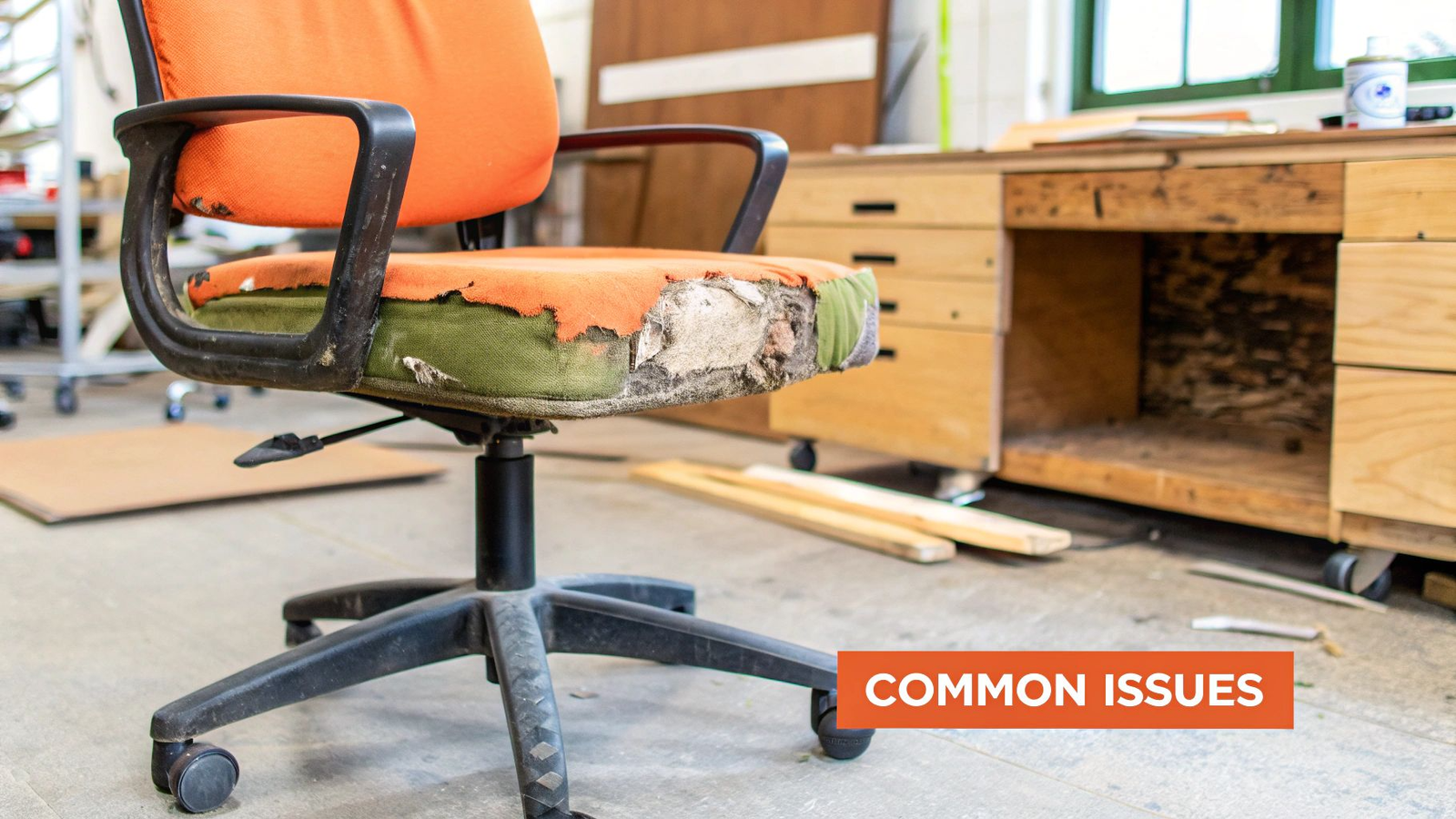
Upholstery wear is another visible sign of chair deterioration. Torn fabric, peeling leatherette, or faded surfaces make chairs look unprofessional and uncomfortable to use. In office environments, worn chairs reflect poorly on the workspace and can affect the overall impression of clients and employees. Professional upholstery repair or replacement restores a clean, professional appearance while also improving durability. High-quality materials chosen for repair often outperform original upholstery in terms of longevity and ease of maintenance.
From a cost perspective, office chair repair is significantly more economical than frequent replacement. Businesses with large numbers of chairs face high expenses if replacements are chosen every time a problem arises. Repair services allow organizations to maintain functional seating while controlling costs. Bulk repair options further reduce expenses and minimize disruption to daily operations. For home offices and small businesses, repair ensures continued comfort without the need for repeated furniture purchases.
Another key advantage of professional repair is sustainability. Discarded office chairs contribute heavily to landfill waste due to mixed materials that are difficult to recycle. Repairing chairs reduces environmental impact by extending their usable life and decreasing the demand for new manufacturing. This approach aligns with responsible business practices and environmental awareness without sacrificing comfort or performance.
Office chair repair also allows customization and adaptation. Users’ needs change over time due to health concerns, job roles, or working hours. Repair services can adjust seating height, cushioning firmness, and support mechanisms to better suit current requirements. This flexibility is rarely available with mass-produced replacement chairs, making repair a more practical long-term solution.
Ultimately, professional office chair repair solves common problems at their source rather than offering temporary fixes. It restores ergonomic support, improves comfort, enhances safety, and extends chair lifespan while saving money and reducing waste. Instead of accepting discomfort or repeatedly replacing chairs, investing in professional repair ensures that office seating remains reliable, supportive, and functional. For individuals and businesses alike, repaired office chairs contribute directly to healthier work environments and improved productivity over time.