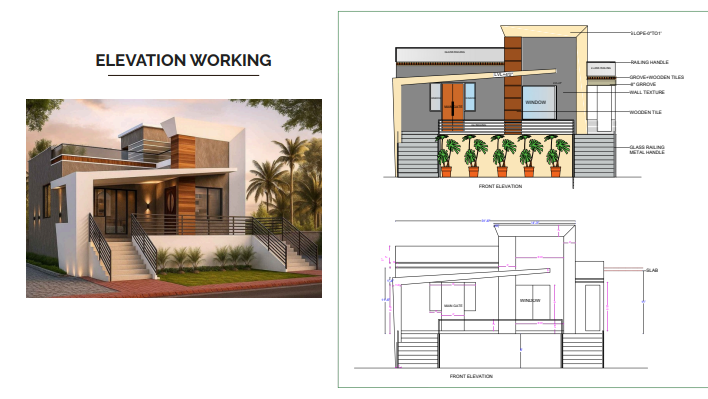
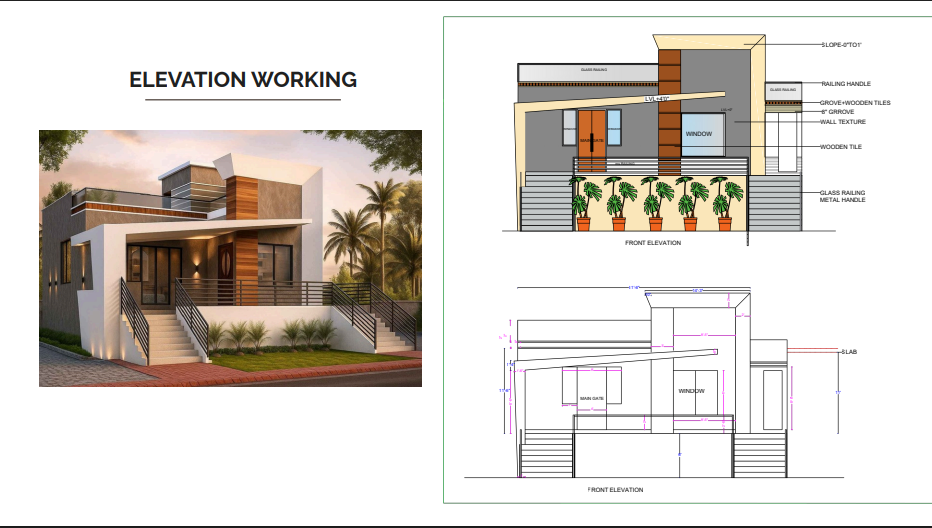
ELEVATION WORKING
Elevation Working is one of the most crucial stages in architectural design, construction planning, and interior–exterior execution. It is the process of creating detailed vertical representations of a building that show height, materials, layers, textures, proportions, structural placements, window positions, balcony shapes, railing types, façade treatment, and aesthetic identity. Elevations define how a building will look from outside once completed. Without accurate elevation working, no contractor, civil team, architect, or designer can execute the building with precision. This detailed process ensures that the entire outer structure follows a uniform design language, technical consistency, structural safety, and visual harmony. In the world of architecture, a high-quality elevation is considered the signature of the building — because while plans define the internal layout, elevation defines the personality, character, and identity of the structure.
Elevation working involves multiple technical steps to achieve an accurate representation. The first stage includes understanding the building’s footprint, orientation, site conditions, and requirements of the client. The direction in which the building faces plays a major role because sunlight, shade, wind direction, and climatic factors influence material selection and façade treatment. For example, western elevations may require materials that resist heat, while northern elevations may allow the use of larger glass surfaces. In elevation working, architects analyze these factors meticulously to propose surfaces, treatments, and patterns that not only look attractive but also support long-term durability and comfort.
The next stage in elevation working involves developing line drawings. These are straightforward outline sketches that show the basic geometry of the building — height, width, positions of walls, parapets, columns, openings, stair projections, and roof profiles. These line drawings act as the skeleton or framework for the elevation. Every window, grill, shade, canopy, projection, louver, or balcony is first represented in simple lines. This stage is essential because it helps the designer match proportions accurately. A well-balanced elevation ensures that nothing looks too large, too small, or misaligned. Proportion and symmetry are the heart of aesthetic elevation design.
After the line drawings, the elevation progresses into detailed working drawings. This level of detail includes exact sizes, measurements, elevation levels, offsets, thicknesses, and material grid alignment. Designers specify plaster thickness, cladding area, tile size, grooves, and even joint spacing. Every centimeter is planned because contractors rely on these drawings during execution. For example, if a wooden tile cladding is planned on the front façade, the working drawing will show how many tiles fit perfectly without cutting, where the grooves will appear, and how they align with windows or beams. This form of precise detailing brings professionalism and accuracy to the final structure.
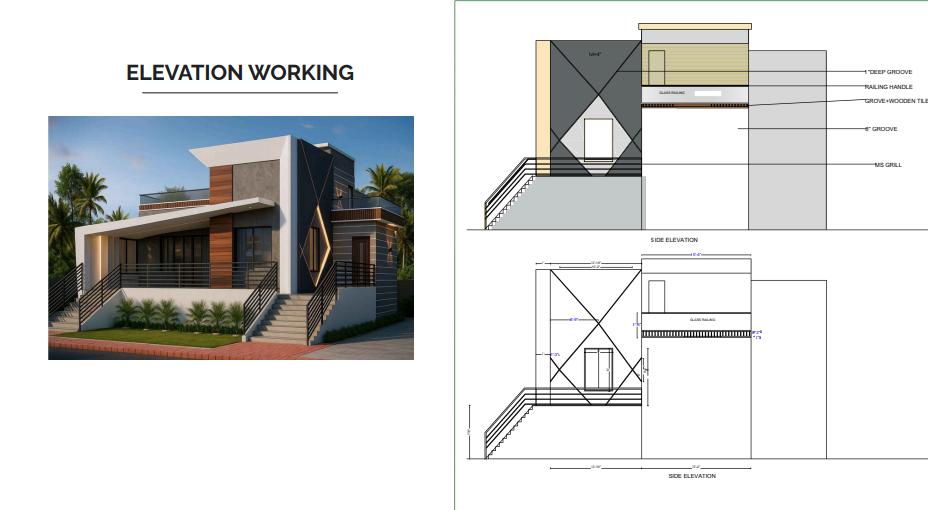
One of the most important elements in elevation working is the façade material selection. A building’s exterior has direct exposure to sun, rain, pollution, dust, and wind. Materials selected for the elevation must be durable, weather-resistant, low-maintenance, and aesthetically pleasing. Designers often choose from a variety of materials such as stone cladding, wooden textures, metal panels, HPL sheets, tiles, textured paint, glass, cement boards, and textured plaster. Each material has strengths and limitations. For instance, HPL is high in durability and resistant to UV rays, while stone cladding adds a premium natural look but increases the load on the structure. Elevation working ensures the right material is used in the right location to achieve long-term performance.
Another integral part of elevation design is lighting planning. External lighting transforms the look of the building during night hours. Elevation working includes the placement of LED strips, spotlights, wall washers, and profile lights. The lighting design highlights textures, creates drama, and enhances architectural features. For example, profile lights installed along grooves or edges make the building appear taller and more refined. Spotlights placed under chajjas or balconies add depth and shadow effects. Lighting needs waterproof fixtures, proper wiring paths, and safe electrical planning — all of which are annotated in the elevation working drawings.
Balcony railings are another vital aspect of elevation working. Their design directly affects safety, appearance, and uniformity. Options include glass railings, MS railings, stainless steel designs, CNC-cut panels, and wooden battens. Elevation working ensures the railing aligns with the overall architectural theme. A modern elevation may prefer clean glass railings, while a contemporary elevation might choose metal profiles. The exact height, spacing, thickness, and installation details are represented accurately in the working drawings to ensure both safety and aesthetic consistency.
Another critical part of elevation design is grooves and texture details. These small elements create visual separation, alignment, structure, and refinement on the façade. Grooves are thin recessed lines carved into plaster to break large surfaces and enhance elegance. Working drawings define their depth (usually 10–15 mm), width, spacing, and alignment. When grooves align perfectly with windows, roof slabs, and cladding edges, the elevation looks professional. Poorly executed grooves can make even the best designs look misaligned. Therefore, elevation working ensures geometric precision.
Elevation drawings also show roof levels and parapet heights. These levels define the vertical geometry of the building. Multi-level roofs add richness and dynamic appeal to the exterior. The working drawing includes RCC projections, shade extensions, canopy thickness, and slope direction for water flow. Parapets often get special attention as they form the visible silhouette of the building. Whether the parapet features glass, brick, stone, or patterned metal, elevation working ensures accurate measurement and installation.
Doors and windows on the elevation are represented with exact placements, sill levels, lintel heights, and finishing details. A symmetrical arrangement of doors and windows brings balance to the elevation. Window shutters, frames, louvers, glass types, and grills are all planned in advance. Misalignment in window placement can completely disrupt the balance of the building. Through elevation working, designers ensure every opening remains aligned with internal planning and exterior aesthetics.
Color selection is another integral part of elevation working. The palette defines the tone and personality of the building. Warm shades such as beige, brown, and terracotta are often used for traditional themes, while neutral shades such as grey, white, and black dominate modern designs. Accent colors are applied to highlight architectural features. The working drawing also includes color codes to ensure painters apply the correct shade on-site without confusion.
One of the most complex tasks in elevation working is the preparation of sectional details. These details show how materials overlap, how different textures meet, how beams intersect, and how projections support weight. Sectional drawings describe installation techniques, anchor points, waterproofing layers, and junction solutions. These sections prevent construction errors and ensure material stability over time.
Once the elevation is fully detailed, designers produce realistic 3D renders. These renders show how the completed building will appear during both day and night. They help clients visualize the colors, textures, materials, and lighting effects with high accuracy. Renders also guide contractors during execution, acting as a visual reference for quality assurance.
Finally, elevation working ensures seamless execution. Contractors, masons, fabricators, carpenters, electricians, and painters all rely on these working drawings. Without elevation working, misalignment, material wastage, design imbalance, and visual inconsistencies become common problems. With detailed elevation working, the building takes its intended shape accurately with continuity and harmony.
In summary, elevation working is not only a technical process but a creative and structural foundation for the entire building façade. It blends engineering precision with artistic vision to deliver a façade that stands strong, looks appealing, and performs well for years. A well-executed elevation working process ensures that the building’s structural elements, visual identity, material durability, and functional aspects come together harmoniously.
Whether it is a residential home, commercial building, villa, apartment, or modern office, elevation working defines the beauty, character, and engineering accuracy of the entire structure.
