
The Most Common Home Appliance Problems and How Professional Technicians Fix Them
Home appliances are essential for smooth and comfortable living, and when any of them stops working, it can disrupt the entire routine of a household. Refrigerators failing to cool, washing machines not spinning, ACs not blowing cold air, microwaves heating unevenly, or TVs showing display issues — these are some of the most common problems that homeowners face regularly.
While some issues may seem small, they often indicate deeper technical faults that require professional attention. Understanding these problems and how expert technicians handle them can help users maintain their appliances better, avoid unnecessary panic, and know when to call for help. In this detailed guide, we will explore the most common problems across major appliances like refrigerators, washing machines, ACs, microwaves, and TVs, and how trained technicians diagnose and repair these issues accurately using advanced tools and techniques.
Refrigerator problems are among the most frequent issues reported by customers. One of the most common complaints is “low cooling” or “no cooling.” This usually happens due to blocked condenser coils, gas leakage, thermostat failure, faulty compressor, or clogged capillary tubes. Expert technicians begin by checking if the fan and compressor are running properly. If the compressor draws excessive current or overheats, it indicates internal failure which requires replacement.
Gas leakage is another major cause; technicians use nitrogen pressure testing to detect leaks and refill refrigerant gas after sealing them. Another issue is water leakage, which typically happens due to blocked drain pipes or melted ice. A trained technician thoroughly cleans the drainage system and realigns the pipe.
Ice formation inside the freezer is often due to faulty defrost sensors or timers, and diagnosing these requires a multimeter to check continuity. Modern refrigerators also come with PCBs (electronic control boards), and if the PCB malfunctions, temperature settings, cooling, and defrost cycles get affected. Technicians repair or reprogram the PCB as needed. All these repairs require precise knowledge and brand-specific expertise, especially for Samsung, LG, Whirlpool, IFB, and Bosch models.
Washing machines also face several common issues that homeowners struggle with daily. The most frequent ones are the machine not spinning, clothes remaining wet after cycle completion, unusual noise during spinning, water not draining, or machine not turning on at all. For no-spin issues, technicians primarily inspect the motor, motor capacitor, belt, and PCB signals. A worn-out belt in a semi-automatic washing machine can slip and cause poor spin performance. In fully automatic models, a faulty motor or inverter PCB can disrupt spin cycles.
Drainage problems occur due to clogged drain pumps, blocked hoses, or faulty pump motors. Noise issues happen when bearings wear out or when objects like coins get stuck inside the drum. Technicians dismantle the drum safely, remove foreign objects, or replace bearings when needed. Electronic errors displayed on the panel (like LE, OE, IE, DE codes in LG or dE, 4C, 5E in Samsung) require brand-specific diagnostic skills, and professionals use technical manuals and experience to interpret these codes correctly. Washing machine repair involves both electrical and mechanical skills; hence only trained technicians can handle it safely and correctly.
Air conditioners are another crucial home appliance, especially during summers. One of the most common issues is “insufficient cooling.” Reasons include low refrigerant gas, dirty filters, blocked outdoor units, faulty compressor, damaged PCB, or improper airflow. A professional AC technician begins by checking gas pressure; low pressure indicates leakage, which is fixed by brazing and recharging the system with the correct refrigerant type. Indoor filters, if clogged, reduce airflow significantly and must be cleaned regularly.
Outdoor units, when blocked by dust, reduce heat dissipation, making cooling weak. Technicians wash the outdoor condenser thoroughly to restore performance. Faulty compressors require replacement, which is a technical job involving vacuuming, pipe connection, pressure testing, and correct refrigerant charging. AC PCB faults cause the unit to turn off suddenly, show temperature errors, or fail to start. Expert technicians test PCB components and replace damaged relays, sensors, or modules. Regular AC servicing can prevent most cooling-related problems and significantly improve energy efficiency.
Microwaves, although small, often face issues such as not heating, sparking inside, plate not rotating, keypad not working, or unusual noise. When a microwave does not heat, the most probable cause is a faulty magnetron, capacitor, diode, or transformer. Technicians check these components using a multimeter and safety protocols, as microwave internal voltages can be dangerously high. Sparking usually happens due to chipped paint, metal utensils, or damaged waveguide covers, which must be replaced immediately.
Turntable rotation failure is caused by broken motor couplers or defective turntable motors. Touchpad or keypad issues occur when membrane switches wear out; technicians open the control panel and replace the membrane sheet or PCB if needed. Because microwaves operate with high-voltage components, only trained professionals should repair them. DIY repair attempts are extremely risky.
Television problems are also common across households, especially LED and smart TVs. Display-related issues such as no picture, lines on the screen, backlight failure, sound but no picture, or TV not turning on are frequent. Backlight problems require LED strip replacement and often involve dismantling the entire TV panel with precision.
Power supply board failures cause the TV to shut down unexpectedly or not turn on at all; technicians test and replace faulty capacitors, ICs, and rectifiers. Display panel issues like vertical/horizontal lines may require T-con board repair. HDMI port problems are also common due to loose connections or burnt ports. Smart TV software glitches require firmware updates or reinstallation. TV repair demands extremely delicate handling, and only trained technicians should open the panel.
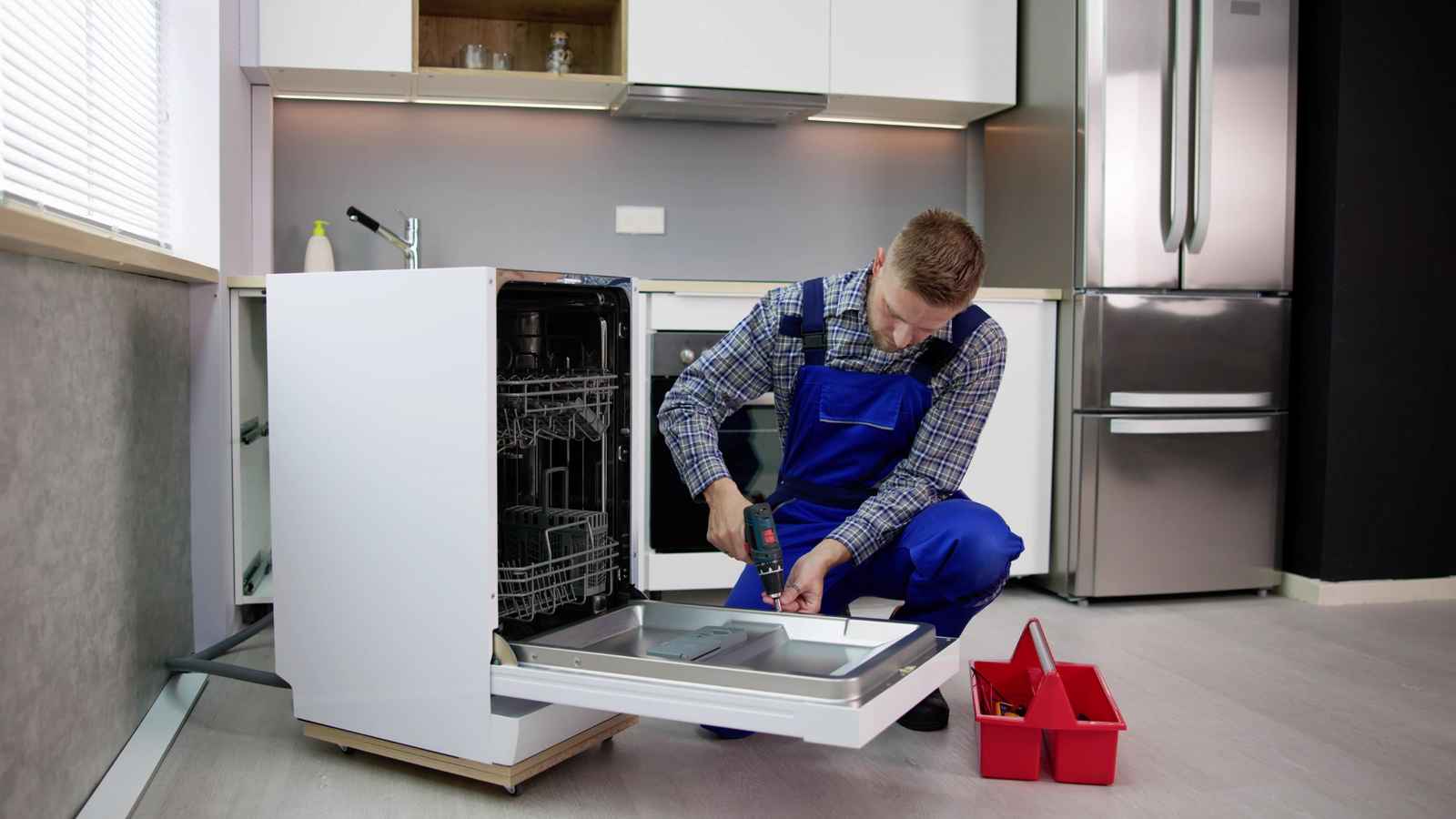
Dishwashers also face common issues such as water not draining, dishes not cleaning properly, unusual noise, foul smell, or leakage. Most drainage problems occur due to clogged filters, blocked drain pipes, or faulty drain pumps. Cleaning the filter and pump area usually solves the issue. Poor cleaning results happen when spray arms are blocked or detergent is not dispensing correctly. Technicians inspect the detergent dispenser, heater, and sensors to ensure proper wash cycles. Leakage is often related to door gasket failure, which needs replacement. Modern dishwashers have complex sensors and PCBs, and diagnosing these faults requires expertise.
The reason professional technicians fix these issues efficiently is because they understand appliance anatomy, read error codes accurately, use proper tools, follow safety procedures, and have brand-specific repair knowledge. They know how internal circuits work, how motors respond under load, how cooling systems behave under pressure, and how sensors detect faults. Their experience allows them to identify the root cause quickly instead of trial-and-error attempts that often worsen the problem.
Preventive maintenance also plays a major role in reducing recurring issues. Technicians clean parts thoroughly, lubricate components where required, align pipes and hoses correctly, tighten loose connections, check voltage levels, and ensure the appliance is installed in an ideal location. Regular service helps catch issues early and prevents costly breakdowns.
In summary, home appliances face predictable patterns of problems based on their use, environment and age. Understanding these issues and trusting trained technicians for timely repairs ensures better performance, lower electricity consumption, improved safety and longer appliance lifespan. Every appliance is an investment, and with professional care, it can run smoothly for many years.